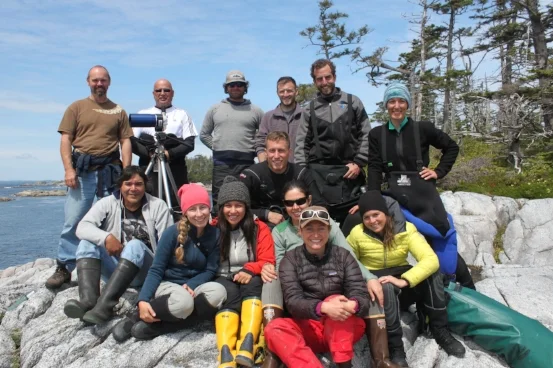
The summer of 2013 was busy with diving, fishing, and conducting research activities all linked to sea otters and kelp forests on B.C.’s central coast! These ecological field activities are part of the Salomon Lab’s larger project examining the cascading effects of predator recovery on coupled human-ocean ecosystems. Watch the short video below by Coastal Voices researcher Jenn Burt to see what we were up to!

Anne’s students are working understand how ecosystems change when sea otters return to them. Here’s a list of research activities from summer 2013:
1) Research divers Jenn Burt, Stu Humchitt, Kyle Demes and Britt Keeling did scuba surveys at 20 rocky reef sites falling along a gradient of sea otter occupation to monitor fish, invertebrates, and kelp to find out how sea otters are influencing these different communities.
2) Leah Honka, Angeleen Olson, Erin Rechstiener and many others spent hours and hours watching sea otters through powerful telescopes to carefully observe and document what the otters are feeding on.
3) Josh Silberg worked with Guardian Watchman Patrick Johnson to catch fish at the 20 rocky reef sites to see if rocky reefs occupied by sea otters have more kelp habitat and possibly more fish.